
Last Updated:
Key Takeaways
- Windows 11 only pins apps, not files or folders. Microsoft removed folder pinning and drew a hard line between applications and file system objects. That is why your right-click menu has no Pin to taskbar option.
- One trick unlocks everything. Wrap the item in something Windows treats as an app — usually
explorer.exe— and the shortcut becomes pinnable. It takes about thirty seconds and needs no extra software. - Look under Show more options. Many pin commands are hidden in the legacy right-click menu, not the compact Windows 11 one. People miss this constantly and assume the feature is gone.
Quick answer: To pin shortcut taskbar Windows 11, right-click the shortcut, choose Show more options, then Pin to taskbar. For files and folders, first create a desktop shortcut with
explorer.exe "C:\Your\Path"as the target, then pin that. Windows only accepts apps, so the explorer.exe wrapper makes it work.
However, the process has changed a bit in Windows 11. In this guide, we’ll walk you through the new way to pin shortcuts to your taskbar in Windows 11 so you can keep your most-used files at your fingertips.
Introduction
You right-click a folder, expecting Pin to taskbar. It is not there. You try a document. Nothing. You had these pinned in Windows 10, and now they have vanished.
You are not doing it wrong. Microsoft removed the option. Windows 11 treats the taskbar as an app launcher, and folders, drives, and files are not apps.
The good news is that the workaround is simple, official enough to appear on Microsoft’s own forums, and takes about thirty seconds once you know it.
This guide covers how to pin a shortcut to the taskbar in Windows 11 in every situation — apps, custom shortcuts, files, folders, drives, websites, and even Settings pages. You will learn the single rule behind all of it, so you can pin almost anything without hunting for another tutorial. Home users and office users can follow every step.
Accessing Taskbar Settings
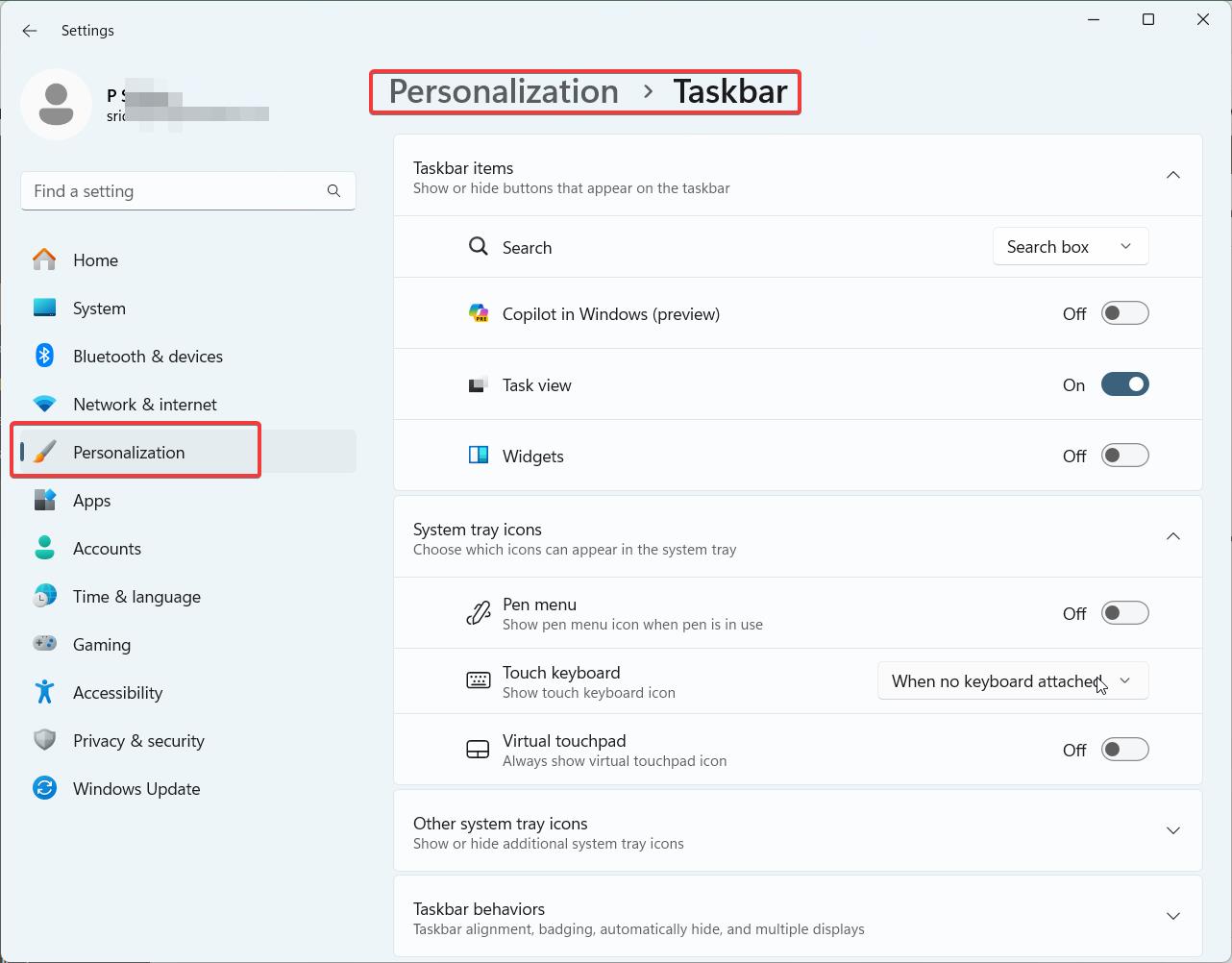
The first step is to open up the taskbar settings in Windows 11. To do this:
- Click the Start button and select the gear icon to open Settings
- In Settings, click “Personalization” in the left sidebar
- On the Personalization page, select “Taskbar”
This will take you to all the various taskbar settings and options available in Windows 11.
The One Rule That Explains Everything
Windows 11 only allows applications to be pinned to the taskbar. Folders, files, and drives are file system objects, not apps, so they have no Pin to taskbar option. The workaround is to create a shortcut that launches an app — usually explorer.exe — with your file or folder as its target. Windows then sees an app and allows the pin.
Windows draws a hard line between apps and file system objects on the taskbar, and only apps are allowed. Every method below is just a different way of dressing something up as an app.
Learn that rule and you stop needing tutorials.
Method 1: Pin an App (The Easy Case)
If it is a normal program, three ways work.
From the Start menu: click Start, find the app, right-click it, select Pin to taskbar. If you cannot see it, click All to view the full app list.
From search: press Windows key, type the app name, then right-click the result and choose Pin to taskbar.
From a running app: open the program, right-click its icon on the taskbar, select Pin to taskbar. It stays after you close it.
That last one is the quiet workhorse. If a pin option is missing anywhere else, just open the thing and pin it from the taskbar.
Method 2: Pin a Handmade Shortcut
Made your own shortcut and found no pin option? Two fixes.
Check the legacy menu first. Right-click the shortcut → Show more options → Pin to taskbar. Windows 11’s compact right-click menu hides many commands, and this is the single most common reason people think pinning is broken.
If it is still missing, double-click the shortcut to launch it, then right-click its icon on the running taskbar and choose Pin to taskbar.
Shift + right-click also opens the legacy menu directly, if you prefer keyboard shortcuts.
Method 3: Pin a Folder (The explorer.exe Trick)
This is the one people want most, and it is the reason this guide exists. Windows 11 does not let you right-click a folder and pin it — you only get Pin to Quick access or Pin to Start.
Here is the workaround:
- Right-click an empty area of the desktop.
- Select New → Shortcut.
- In the location box, type
explorer.exefollowed by your folder path in quotes:
explorer.exe "C:\Users\YourName\Documents\Projects"- Click Next, give it a sensible name, click Finish.
- Right-click the new shortcut → Show more options → Pin to taskbar.
That is it. Windows sees a shortcut that starts with explorer, treats it as an app launch, and allows the pin.
Fix the icon. It will show the generic File Explorer icon. Right-click the shortcut → Properties → Shortcut tab → Change Icon → pick a folder icon → Apply → OK. Do this before pinning, or unpin and repin afterwards.
The same method works for drives and network locations, provided they are available when you click.
Method 4: Pin a File or Document
The same principle, one adjustment. A document is not an app, so you point at the app that opens it.
Create a new shortcut and use the program’s path followed by the file path:
"C:\Program Files\Microsoft Office\root\Office16\WINWORD.EXE" "C:\Users\YourName\Documents\Report.docx"Then pin the shortcut as above.
The simpler alternative: pin the app itself (Word, Excel, Notepad), then right-click the pinned icon. Your recent files appear in the Jump List. Hover over a file and click the pin icon beside it to pin that document permanently to the app’s list.
That second method is what most people actually want when they ask about pinning documents. It keeps the taskbar clean and puts the file two clicks away.
Method 5: Pin a Website
Microsoft Edge: open the site → click the three-dot menu → More tools → Pin to taskbar.
Google Chrome: open the site → three-dot menu → Cast, save and share → Create shortcut → tick Open as window → the shortcut appears on your desktop → right-click it → Pin to taskbar.
That “Open as window” tick matters. Without it, Chrome creates a link rather than something Windows treats as an app.
To pin Bing specifically, open bing.com in Edge and follow the Edge steps. Same for any site you use daily.
Method 6: Pin a Settings Page or Control Panel Applet
Windows 11 lets you pin the Settings app, but not individual pages — and it removed pinning for classic Control Panel applets.
For Settings pages, create a shortcut using the ms-settings URI:
explorer.exe ms-settings:bluetoothCommon ones: ms-settings:display, ms-settings:network, ms-settings:windowsupdate, ms-settings:powersleep.
For Control Panel applets, use the control command:
control.exe /name Microsoft.DeviceManagerThen pin the shortcut. Same rule as always — wrap it in something Windows sees as an app.
Method 7: Rearrange and Position Your Pins
Once pinned, drag icons left or right to reorder them. They stay where you put them.
On the right side? No. Windows 11 does not support pinning icons to the far right of the taskbar — that area belongs to the system tray. What you can do is move all your icons left: Settings → Personalization → Taskbar → Taskbar behaviors → Taskbar alignment → Left. That restores the Windows 10 layout many people are actually asking for.
Across virtual desktops? Taskbar pins are system-wide. Pin an app once and it appears on every virtual desktop. Windows 11 does not offer per-desktop pinning — you can set different wallpapers per desktop, but not different pinned apps.
Enable Recent Items – pin shortcut taskbar windows 11
In order to pin shortcuts to files or folders on your taskbar, you first need to enable a setting called “Show recently opened items in Start, Jump Lists, and File Explorer”. Here’s how:
- On the Taskbar settings page, scroll down to the “Taskbar behaviors” section
- Locate the setting labeled “Show recently opened items in Start, Jump Lists, and File Explorer”
- Toggle this setting to the “On” position
By default, this setting is turned off in a fresh installation of Windows 11. Enabling it will allow your recently opened files and folders to show up when you right-click an app on the taskbar, which is key for the next steps.
Pin Your Desired App
Next, you’ll want to make sure the main app you want to pin a shortcut from is already pinned to your taskbar. For example, if you want to pin an Excel spreadsheet, make sure the Excel app itself is already pinned. If it’s not:
- Open the Start menu
- Locate the app you want to pin in the app list
- Right-click the app and select “Pin to taskbar”
The app icon will now always show on your taskbar, ready for you to access or pin additional shortcuts.
Open File and Pinning Shortcuts to Taskbar Windows 11
Now you’re ready to open the actual file you want to create a pinned shortcut for. Using the Excel example:
- Open the Excel spreadsheet you want to pin either from the Excel app itself or from File Explorer
- Once the file is open, right-click the Excel app icon on the taskbar
- You should see your recently opened spreadsheet listed in the jump list that appears
- Hover over the file name, and click the pin icon that appears
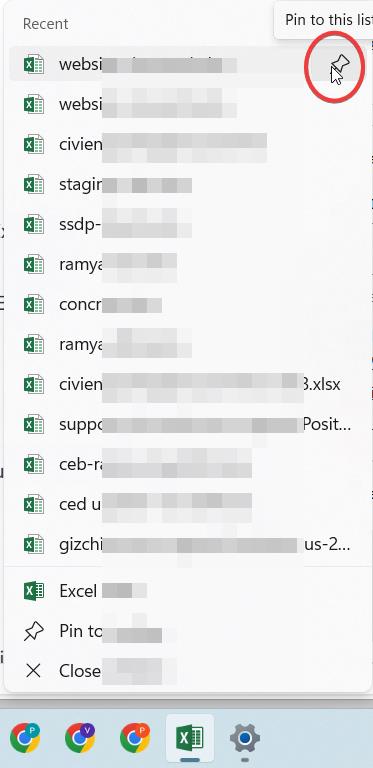
The shortcut to that specific Excel file will now be pinned to your Excel jump list. Anytime you right-click the Excel icon on the taskbar, your pinned spreadsheet shortcut will be listed for quick access.
Repeat for Additional Shortcuts
You can follow the same process outlined above to pin shortcuts for files from other applications as well, like Word documents, PowerPoint presentations, Photoshop projects, frequently used folders, etc. Just open the file you want to pin so it shows in the recent items list, then pin it from the app’s jump list on the taskbar.
Removing Pinned Shortcuts
If your taskbar jump lists start to get cluttered with pinned shortcuts you no longer need, it’s easy to remove them:
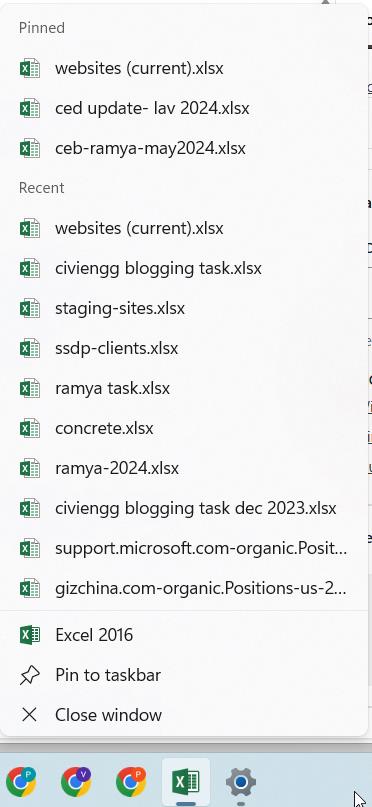
- Right-click the app icon on the taskbar
- Right-click the pinned shortcut you want to remove
- Select “Unpin from this list”
The shortcut will be removed from your pinned items and jump list. You can always re-pin it later if needed by opening the file again.
Optional: Disable Recent Items
Once you have your desired shortcuts pinned to your taskbar, you may want to go back and disable the “Show recently opened items” setting we enabled earlier. Your pinned shortcuts will remain even with this setting turned off – it just prevents additional recent files from showing in the jump lists, keeping them cleaner. But you can leave the setting enabled if you prefer having the recent file lists available as well.
Best Practices
- Pin the apps you open daily, not everything. A crowded taskbar defeats the purpose.
- Use Jump Lists for documents instead of pinning each file separately.
- Change the icon before pinning to save yourself an unpin-repin cycle.
- Keep folder shortcuts in one desktop folder so you can rebuild pins quickly after a reset.
- Set taskbar alignment to Left if you came from Windows 10 — it fixes most of the “this feels wrong” complaints.
Common Mistakes to Avoid
- Missing Show more options. The pin command is often just hidden in the legacy menu.
- Forgetting the quotation marks. Paths with spaces fail without them.
- Omitting explorer.exe. A bare folder path is a file system object, and Windows will refuse it.
- Changing the icon after pinning. The pinned copy keeps the old icon. Unpin, change, repin.
- Expecting per-desktop pins. They are system-wide, by design.
- Installing third-party software for this. You do not need it. The built-in trick works.
Recommended Tools
- File Explorer — the engine behind the whole workaround.
- Notepad — handy for drafting long shortcut target paths before pasting.
- Change Icon dialog (in shortcut Properties) — built in, free, no extras needed.
Everything here ships with Windows 11. No downloads required.
How do I pin a folder to the taskbar in Windows 11?
Windows 11 removed direct folder pinning. Create a desktop shortcut with explorer.exe "C:\Your\Folder\Path" as the location, then right-click it, choose Show more options, and select Pin to taskbar. Windows treats it as an app launch, so the pin works normally.
Can I pin a document or file to the Windows 11 taskbar?
Not directly, but two options work. Create a shortcut combining the program’s path and the file path, then pin it. Alternatively, pin the app itself, right-click its taskbar icon, and pin the file within the Jump List — usually the tidier choice.
Can I pin different apps to the taskbar on different virtual desktops?
No. Taskbar pins in Windows 11 are system-wide, so any app you pin appears on every virtual desktop. You can set different wallpapers per desktop, but pinned apps stay consistent. Microsoft does not currently offer per-desktop pinning.
Can I pin a Settings page to the Windows 11 taskbar?
Yes, using a URI shortcut. Create a shortcut with explorer.exe ms-settings:bluetooth, swapping in the page you want — ms-settings:display, ms-settings:windowsupdate, and similar. Then pin the shortcut. The same approach works for Control Panel applets using the control.exe command.
Conclusion
Pinning shortcuts to the taskbar in Windows 11 may work a bit differently than in previous versions of Windows, but it’s still a fairly straightforward process once you know the steps.
Pinning a shortcut to the taskbar in Windows 11 is easy once you understand what Microsoft actually changed. The taskbar is now an app launcher. Apps go on it. Everything else needs a disguise.
That disguise is almost always explorer.exe. Wrap your folder, file, drive, or Settings page in it, create a shortcut, and Windows stops objecting. Thirty seconds, no software, no registry edits.
And if a pin option seems missing, check Show more options before assuming it is gone. Windows 11 hides more than it removes.
Try the explorer.exe trick on the folder you open most often today. Then tell us in the comments what you pinned — the practical use cases are always more interesting than the theory.
