
Last Updated:
Quick answer: The easiest way to update all drivers at once in Windows 11 is Settings → Windows Update → Advanced options → Optional updates → Driver updates — tick every driver and click Download & install. For a command-line approach, use PowerShell’s PSWindowsUpdate module or
pnputilto bulk-install driver packages. There is no single native command that downloads and updates every driver in one step.
Having the latest drivers for all your hardware is key to maximum performance and stability on a Windows PC. But updating drivers one by one through Device Manager is tedious and slow.
This guide shows you how to update all drivers at once—using Windows Update, the command line, Device Manager, manufacturer tools, and third-party software—with commands verified against Microsoft’s own documentation for 2026.
Key Takeaways
- The easiest way to update all drivers is Windows Update’s optional driver updates page — Settings → Windows Update → Advanced options → Optional updates → Driver updates. It’s free, built-in, Microsoft-tested, and where most hardware drivers actually appear. No commands or software needed.
- There is no single CMD command that updates every driver at once. Any guide promising one magic line is wrong. Use PowerShell’s PSWindowsUpdate to download updates and
pnputilto bulk-install local driver packages—the real command-line toolkit. - Two commands you’ll see everywhere are broken.
wuauclt /updatenowis deprecated and dead on modern Windows, and there is noUpdate-DriverPowerShell cmdlet. This guide uses only verified, working commands. - For laptops, your manufacturer’s tool is often best. Dell Command Update, HP Support Assistant, Lenovo Vantage, and MyASUS pull model-specific power, display, and firmware drivers that Windows Update and generic updaters miss.
I’ve rebuilt drivers on dozens of fresh Windows installs over the years, and I’ll be honest about what each method can and can’t do—including the popular “one CMD command” myth that sends people chasing a command that doesn’t exist.
Whether you’re on a desktop or need to update laptop drivers, home users and office users can follow every step.
Why Update All Drivers at the Same Time?
Mass-updating drivers together, rather than one at a time, has real advantages:
- It saves significant time compared to updating each device manually.
- It ensures no device driver is accidentally left outdated.
- It prevents conflicts that can arise from mismatched, partially updated drivers.
- It often resolves several device problems or errors at once.
- It usually needs just a single restart to finish.
As long as you use trustworthy methods — and this guide sticks to Microsoft’s built-in tools and reputable software — updating all drivers in bulk is safe and straightforward. Before that, check the list of drivers that need updating. For this you can follow this guide.
Method 1: Update All Drivers via Windows Update (The Easiest Way)
For most people, Windows Update is the easiest way to update all drivers at once and the safest. Microsoft tests these drivers for compatibility before distributing them, so the risk of a bad update is low — no commands, no software required.
- Open Settings (Windows + I) → Windows Update.
- Click Check for updates. Windows scans for driver and system updates together.
- Click Download & install for anything it finds, then Restart now to finish.
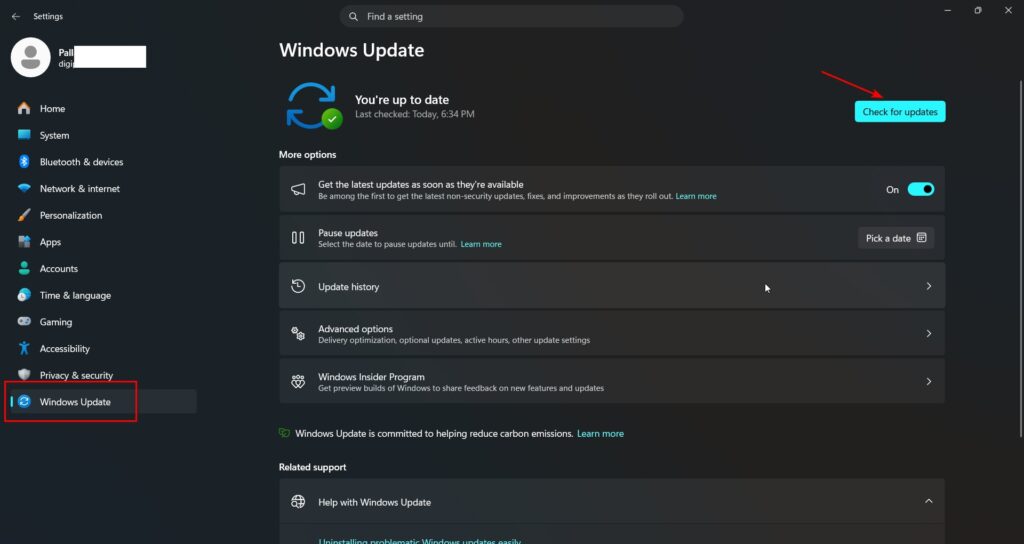
Don’t miss the Optional driver updates—this is where most hardware drivers actually live, and many users never look here:
- Go to Settings → Windows Update → Advanced options.
- Click Optional updates.
- Expand Driver updates.
- Tick every driver you want (or all of them) and then click Download & install.
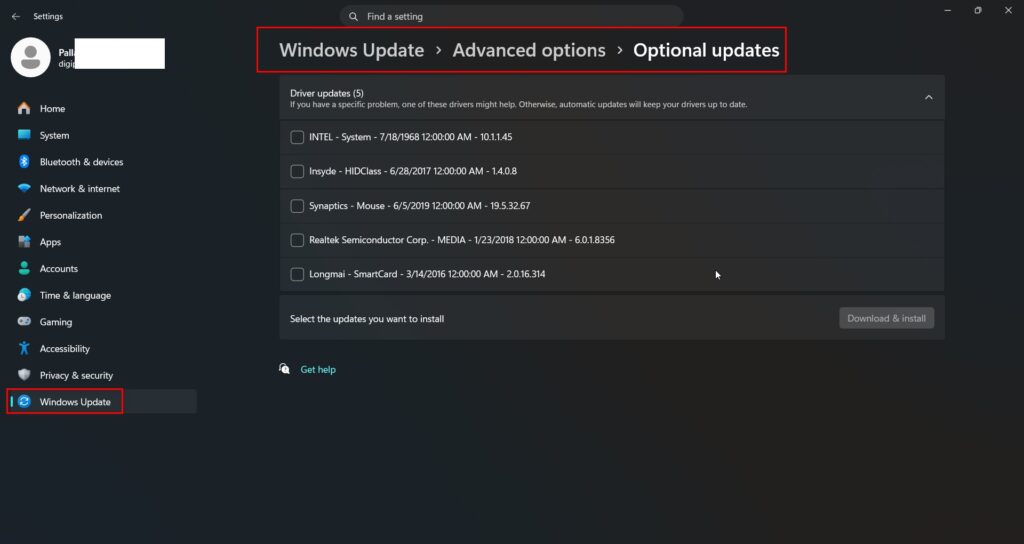
This optional-updates page is the closest thing Windows has to a genuine “update all drivers” button, and it’s built right in. To update all drivers on Windows 10, go to Settings → Update & Security → Windows Update → View optional updates → Driver updates. Either way, this is how to make sure all drivers are updated without any extra tools.
Method 2: How to Update All Drivers at Once Using CMD and PowerShell
This is the method most people search for—the cmd command to update all drivers—and the one most guides get wrong. So let me start with the honest truth:
There is no single CMD command that scans, downloads, and installs every driver on your PC. Microsoft doesn’t design driver servicing that way, and any guide showing you one magic line is giving you a command that either doesn’t work or does something different from what you think. Instead, Windows gives you a small toolkit of commands, each for a specific job. Here’s how to use the command prompt for driver management the right way.
Note on outdated commands: older guides (including earlier versions of this one) suggested them. That command is deprecated and no longer works on Windows 10 or 11 — Microsoft replaced the old Windows Update client. Use the PowerShell method below instead. Likewise, there is no built-in
Update-DriverPowerShell cmdlet, despite what many copied scripts claim.
Automatically Update All Drivers via PowerShell (PSWindowsUpdate)
This is the closest thing to a command that will automatically update all drivers from the internet—it actually reaches Windows Update and pulls driver updates from the command line, using the free, widely-trusted PSWindowsUpdate module. This is the real way to update all drivers cmd automatically.
- Open PowerShell as administrator (right-click Start → Terminal (Admin)).
- Install the module:
Install-Module PSWindowsUpdate -Force
If it’s blocked, run Set-ExecutionPolicy RemoteSigned -Scope CurrentUser first, then retry.
- Check what’s available, drivers included:
Get-WindowsUpdate -MicrosoftUpdate
- Download and install the driver updates:
Install-WindowsUpdate -MicrosoftUpdate -UpdateType Driver -AcceptAll
This installs the same Microsoft-approved drivers the Settings app would fetch, but scriptable and hands-off—ideal for IT admins who need to update Windows drivers automatically across many machines. The one caveat: it only installs Microsoft-distributed drivers, so for the very latest GPU drivers you’ll still want NVIDIA, AMD, or Intel’s own installers.
Use pnputil to Bulk-Install Driver Packages
pnputil is the built-in tool that genuinely installs many drivers at once on a live PC—but from driver files you already have, not from the internet. It’s perfect after a clean Windows install or when restoring a driver backup.
First, list every third-party driver already installed:
pnputil /enum-drivers
Then, to install every driver package in a folder (and its subfolders) at once:
pnputil /add-driver "C:\Drivers\*.inf" /subdirs /install
/subdirsreaches nested folders, so no package is missed./installactually applies the drivers to matching devices.
This is the real command to update all drivers when you have the packages on disk. Note that pnputil needs the extracted .inf files, not the original .exe installers—if you see “No driver packages found,” that’s usually the reason.
Use DISM (For Offline Images Only)
You’ll see DISM recommended for driver updates everywhere, but here’s the important distinction most guides miss: DISM’s driver commands target offline Windows images, not your live running system. Use it when preparing or servicing a mounted Windows image, not for everyday updating.
To list drivers in the current image:
DISM /Online /Get-Drivers /Format:Table
To add all drivers from a folder to an offline image:
DISM /Image:C:\mount\offline /Add-Driver /Driver:C:\Drivers /Recurse
For a normal running PC, use pnputil (above) instead — it’s the correct tool for a live system. We cover the full command-line approach, including how to update all drivers using cmd step by step, in our dedicated guide to updating drivers using CMD.
Method 3: Update Drivers via Device Manager
Device Manager updates drivers one device at a time. It’s slower, but useful when a single piece of hardware is misbehaving and you want to target just that one.
- Right-click Start → Device Manager.
- Expand a category and right-click a device.
- Choose Update driver, then select Search automatically for drivers.
- Windows installs any better driver it finds.
- Repeat for other devices, then restart.
For a device with a warning icon (missing or broken driver), you can also choose Browse my computer for drivers and point it to a folder of downloaded drivers — handy alongside the pnputil method above.
Method 4: Manufacturer Driver Update Tools (Dell, HP, Lenovo, ASUS)
If you want to update Dell drivers, HP, Lenovo, or ASUS drivers specifically, the manufacturer’s own tool is often the best source — it pulls vendor-tuned drivers and firmware that Windows Update doesn’t carry. The main ones:
- Dell: Dell Command Update / SupportAssist
- HP: HP Support Assistant
- Lenovo: Lenovo Vantage / System Update
- ASUS: MyASUS
- Acer: Acer Care Center
Install your brand’s tool, let it scan, and it updates all of that machine’s drivers in one pass. This is especially useful for laptop drivers, where the manufacturer usually has the best power management, display, and function-key drivers for your exact model—the ones generic updaters often get wrong.
Method 5: Third-Party Driver Updater Tools
Third-party updaters scan your system and update outdated drivers in bulk with a couple of clicks. They can be convenient, especially for older hardware Windows Update ignores—but choose carefully, as this category includes some low-quality software.
Reputable options include IObit Driver Booster and Snappy Driver Installer Origin (free and open-source). We maintain a vetted list in our guide to the best free driver updater software.
A genuine caution: stick to well-reviewed tools, decline bundled extras during installation, and always create a restore point first. For most users, Windows Update (Method 1) is safer and sufficient — reach for third-party tools mainly when specific hardware needs a driver Windows won’t provide.
How to Check Which Drivers Are Outdated First
Before updating, it helps to know what actually needs to be updated. Run this in PowerShell for a full device-and-version table:
Get-WmiObject Win32_PnPSignedDriver | Select-Object DeviceName, DriverVersion, DriverDate | Sort-Object DeviceName
This lists every device with its current driver version and date. Compare the dates against the vendor’s website to spot genuinely outdated drivers—often it’s just one or two, not your whole system, which saves you an unnecessary bulk update.
How to Verify Your Driver Updates Worked
After any method, confirm that the changes took effect:
- Device Manager: expand a category, right-click the device → Properties → Driver tab → verify the driver version and date.
- PowerShell: re-run the
Get-WmiObject Win32_PnPSignedDrivercommand above and compare versions.
Then restart your PC. A reboot isn’t always required, but it’s strongly recommended after updating core drivers — graphics, audio, chipset, or network — so the changes fully apply.
Windows 11 vs Windows 10: What’s Different?
The good news: the methods are nearly identical on both versions. Every command here—pnputil, DISM, PSWindowsUpdate, and the Get-WmiObject check—works the same, so there’s no separate cmd command to update all drivers in Windows 10 versus Windows 11 cmd. These are core Windows tools that haven’t diverged.
The only real differences are in the Settings-app paths:
- Optional driver updates — Windows 11: Settings → Windows Update → Advanced options → Optional updates → Driver updates. Windows 10: Settings → Update & Security → Windows Update → View optional updates → Driver updates.
- Both versions get most drivers automatically through Windows Update; both benefit from checking the optional-updates page, which people on either version tend to overlook.
So whether you need to know how to update all drivers in Windows 10 or how to update all drivers in Windows 11, the toolkit is the same—only the menu path changes.
How to Update Device Drivers at once in Windows 11
Here are the steps to update all device drivers at once in Windows 11:
- Open Windows Update settings (Settings > Windows Update).
- Click on “Check for updates.” Windows will look for any available drivers and updates.
- On the Windows Update screen, click “Download and install now” to download all pending driver and software updates.
- Once the downloads are complete, click “Restart now” to install the updates. Restarting is required to finalize driver installations.
- An alternative is to use Device Manager to update drivers:
- Open Device Manager > Select each device > Right-click and select “Update driver.”
- For each device, choose “Search automatically for updated driver software.”
- Windows will install any available driver updates one by one.
- Restart your PC when prompted to finish the installation process.
- You can also use third-party driver updater tools to mass detect and update all drivers at once.
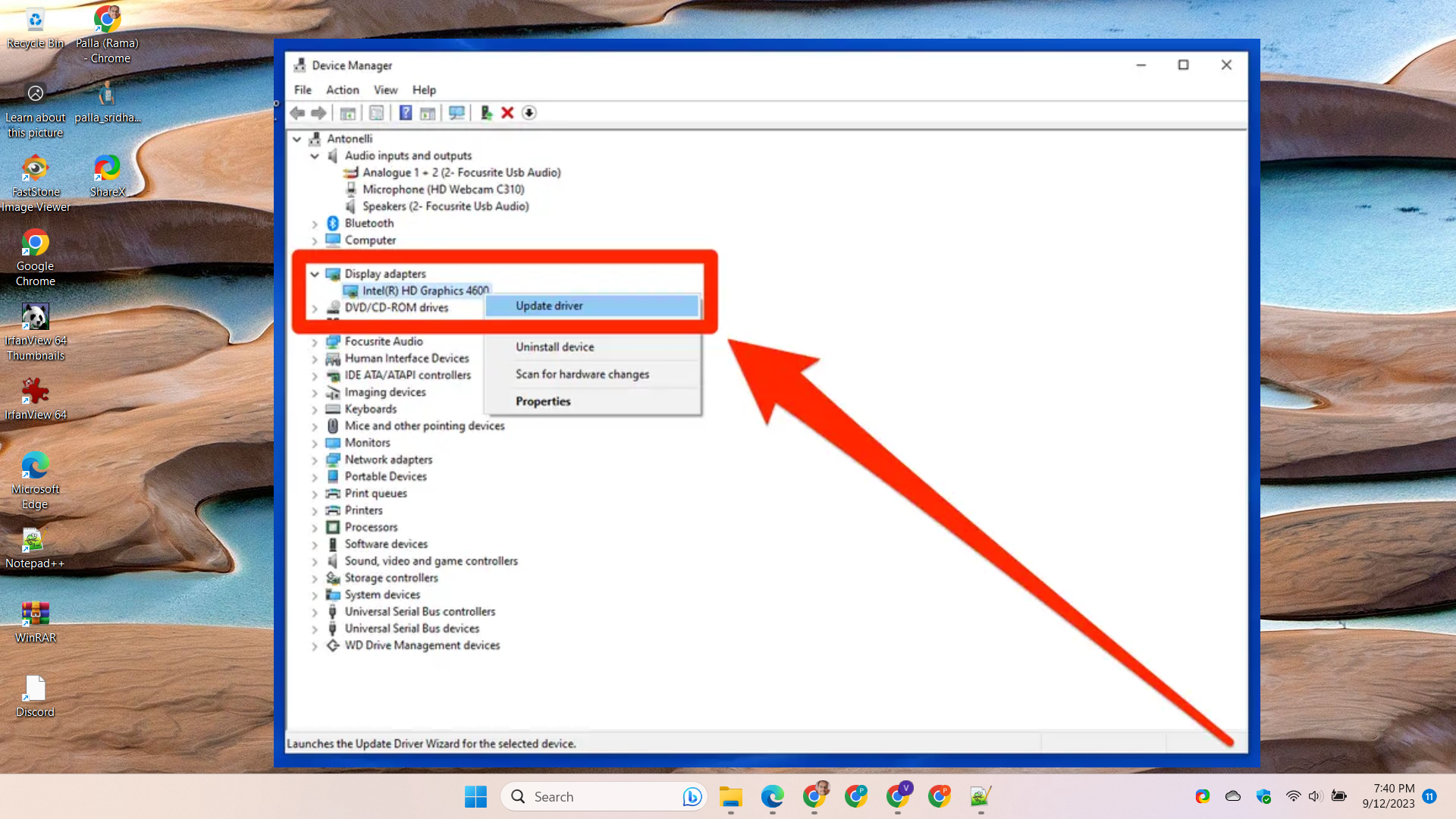
Following these steps will ensure all your device drivers are up-to-date on Windows 11 using either Windows Update or Device Manager. Restarting is key to completing any driver installations.
Best Practices for Updating All Drivers
- Create a restore point before any bulk driver update, so you can roll back cleanly if something misbehaves.
- Prefer Windows Update for safety; it’s Microsoft-tested.
- Use your manufacturer’s tool (Dell, HP, Lenovo, ASUS) for laptop-specific and GPU drivers.
- Run the command prompt as administrator, or driver commands fail silently.
- Restart after core driver updates (graphics, audio, chipset, network).
Common Mistakes to Avoid
- Believing in a single “update all drivers” command. It doesn’t exist — use the toolkit above.
- Using
wuauclt /updatenow. This is deprecated and non-functional on modern Windows; use PSWindowsUpdate instead. - Running DISM /Add-Driver on a live system will not download drivers from the web. DISM installs local packages to images; it doesn’t fetch updates from the internet.
- Point pnputil at .exe installers. It needs .inf files extracted.
- Installing sketchy driver-updater software. Stick to reputable, well-reviewed tools and decline bundled extras.
- Skipping the restart after updating important drivers.
Best Driver Updater Tools
Specialized driver updater utilities automate the process of detecting and mass updating outdated or broken drivers. The top options include
- IObit Driver Booster—The most popular driver updater with a 4,500,000+ driver database.
- SlimWare Utilities—a lightweight program with broad driver support.
- TweakBit PCRepairKit—All-in-one system optimizer with driver updating.
- Auslogics Driver Updater—user-friendly interface for beginners.
These tools make updating all drivers at once straightforward with a few clicks.
Step-By-Step Instructions
Follow these simple steps to bulk update your drivers using driver updater software:
- Download and install an updater tool like Driver Booster.
- Open the program and click Scan to detect outdated drivers.
- For a bulk driver upgrade, review the list and select Update All.
- Restart your PC when prompted to complete installation.
- Verify updated driver versions in Device Manager.
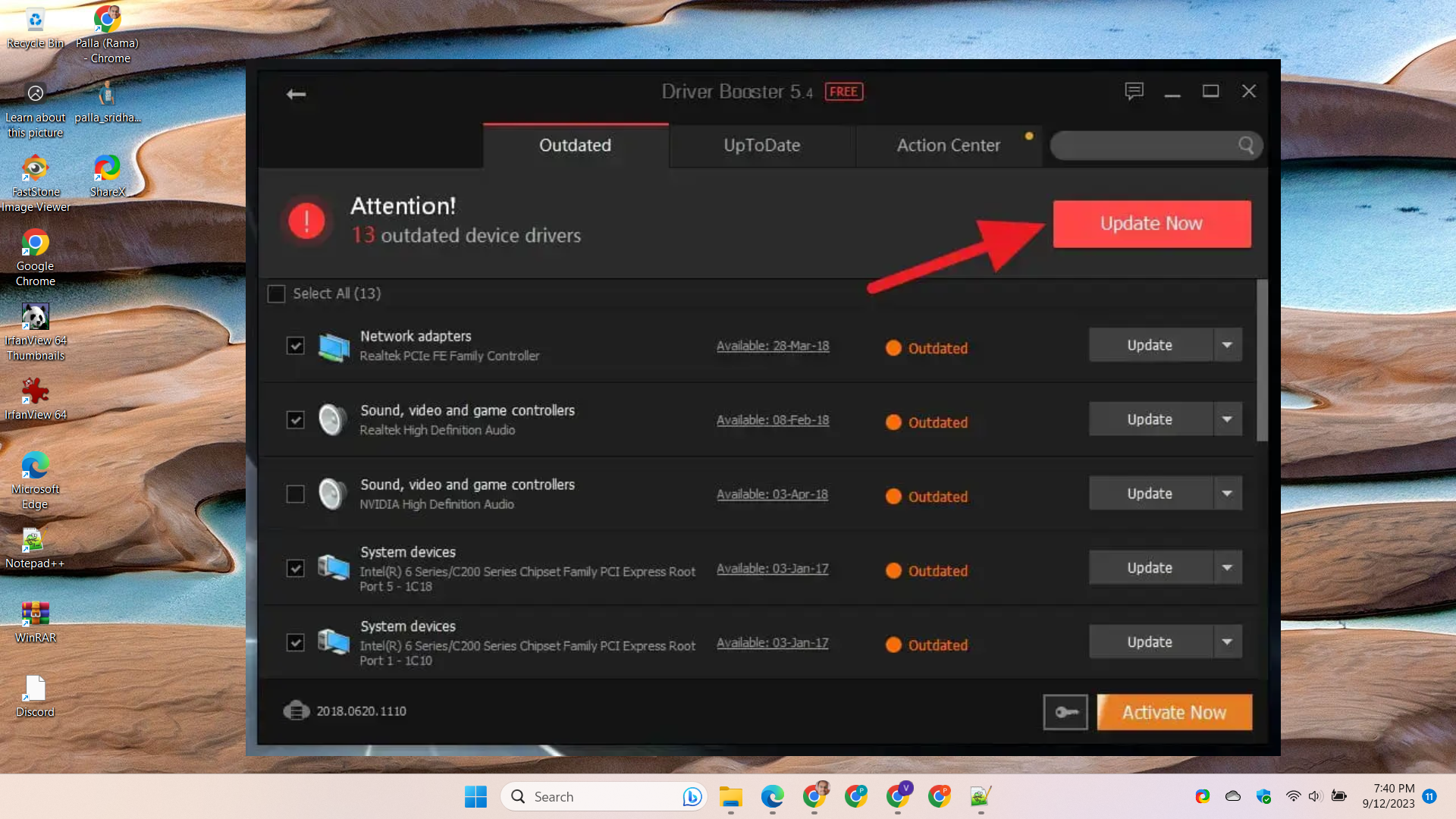
That’s all there is to it! Keeping drivers updated with specialized tools is simple and hassle-free.
Frequently Asked Questions
What is the easiest way to update all drivers at once?
Windows Update is the easiest way. Go to Settings → Windows Update → Advanced options → Optional updates → Driver updates, select all, and click Download & install. It’s free, built in, and Microsoft-tested — no commands or third-party software needed. Check this page regularly, as most hardware drivers appear there.
How do I automatically update all drivers in Windows 11?
For a hands-off command-line method, use PowerShell: install the PSWindowsUpdate module, then run Install-WindowsUpdate -MicrosoftUpdate -UpdateType Driver -AcceptAll. It automatically downloads and installs the driver updates Microsoft distributes. For a no-command option, Windows Update’s optional driver updates page does the same through the Settings app.
How do I update all drivers using CMD on Windows 10 or 11?
The commands are identical on both. Use pnputil /add-driver "folder\*.inf" /subdirs /install to bulk-install local driver packages, or PowerShell’s PSWindowsUpdate module to download updates. Avoid the old wuauclt /updatenow command — it no longer works on modern Windows. Always run the prompt as administrator.
How do I update laptop drivers from Dell, HP, or Lenovo?
Use the manufacturer’s own tool — Dell Command Update, HP Support Assistant, Lenovo Vantage, or MyASUS. These pull drivers and firmware tuned for your exact laptop model, including power, display, and function-key drivers that Windows Update and generic updaters often miss. Install the tool, scan, and it updates all your drivers at once.
Is it safe to update all drivers at once with third-party software?
It can be, if you choose reputable, well-reviewed tools and create a restore point first. Many driver updaters bundle unwanted extras or push unnecessary updates, so decline add-ons during installation. For most users, Windows Update is the safer choice; use third-party tools mainly for hardware Windows won’t cover.
How do I make sure all drivers are updated?
Run Windows Update including its optional driver updates page, then verify with PowerShell: Get-WmiObject Win32_PnPSignedDriver | Select-Object DeviceName, DriverVersion, DriverDate. Compare versions against vendor sites. Add your manufacturer’s tool for laptop-specific drivers, and you’ve covered every source Windows offers.
Conclusion
Updating all your drivers at once doesn’t require a paid app or a mythical one-line command. For most people, the easiest way to update all drivers is Windows Update — including its often-missed optional driver updates page. When you need more control, PowerShell’s PSWindowsUpdate downloads updates from the command line, pnputil bulk-installs packages you already have, and your manufacturer’s tool covers laptop-specific drivers.
The honest rules to remember: there’s no single command that does everything, wuauclt /updatenow is dead, and DISM is for offline images, not your live PC. Obtain GPU and laptop drivers from the vendor, create a restore point first, and restart when you’re done.
Then please let us know in the comments which method worked best for your setup; it will help the next reader choose more quickly.
Open Windows Update today, check the optional driver updates, and run the Get-WmiObject check to see what’s actually outdated. Then tell us in the comments which method worked best for your setup—it helps the next reader choose faster.
For the complete command-line walkthrough with every verified command, see our dedicated guide on how to update drivers using CMD.
