
Last Updated:
Key Takeaways
- Most people don’t need a driver updater tool at all. Windows Update, Device Manager, and your PC maker’s own app cover nearly every driver safely and free. The best way to update all drivers is usually the built-in one.
- Many “free” driver updaters are freemium traps or worse. They scan for free but charge to actually install, and some bundle unwanted software. A few have a genuine reputation problem. This guide is honest about which is which.
- If you do use one, Snappy Driver Installer Origin is the safest pick. It’s genuinely free and open-source, has no freemium paywall, and doesn’t push bundled extras—unlike most of the commercial options.
Quick answer: The safest and best way to update all drivers for free is Windows Update (Settings → Windows Update → Advanced options → Optional updates → Driver updates), plus your PC manufacturer’s app for laptop-specific drivers. If you want a dedicated tool, Snappy Driver Installer Origin is the only genuinely free, no-strings option. Most commercial “free driver updaters” only scan for free and charge to install.
Introduction
If you searched for a free driver updater, you probably expected a list of programs to download. This guide has that — but it starts with something the affiliate-heavy roundups won’t tell you: most people don’t need a driver updater at all, and some of these tools cause the exact problems they promise to fix.
I’ve tested these programs over the years, read the support horror stories, and watched a reader lose her laptop’s audio for ten days to one of them.
So instead of ranking tools by which pays the best commission, this guide gives you the honest version: the best way to update all drivers for free using tools you already have, which few third-party updaters are genuinely worth, and which to avoid outright.
If you just want your drivers’ current safety, the first few sections are all you need. If you’re set on a dedicated driver updater tool, the honest reviews follow further down.
Either way, you’ll leave knowing exactly what to do—and what to avoid—instead of getting funneled toward a $40 subscription you didn’t need.
Home users and office users can follow every step.
What a Driver Updater Actually Does (and Doesn’t)
Before deciding whether you need one, it helps to understand what a driver updater tool genuinely does under the hood.
A driver updater scans the hardware on your PC, reads the version of each installed driver, and compares those versions against a database the software maintains. When it finds a device whose driver is older than what’s in its database, it flags it as “outdated” and offers to download and install the newer one.
That sounds helpful, and sometimes it is. But notice the critical detail: the tool compares against its own database, not necessarily the manufacturer’s latest tested release.
That’s the root of most driver-updater problems. The database may hold a driver that’s newer but not actually better for your specific hardware — or a generic version when your laptop needs a vendor-tuned one.
When a driver update utility installs the wrong-but-newer driver, a working device can suddenly stop working.
This is the difference between a driver being old and being outdated. Windows deliberately keeps stable drivers in place for years.
A 2022 driver that works perfectly is not a problem to solve, but a driver updater program will still flag it, because to the software, “not the newest” equals “outdated.”
Understanding this distinction is the single most important thing on this page, and we cover it in depth in our guide on how to check for outdated drivers.
The Truth: You Probably Don’t Need a Driver Updater
Let’s start where the review sites won’t. For the vast majority of Windows 11 and 10 users, a third-party driver updater tool is unnecessary—and occasionally harmful.
Here’s why. Windows Update already delivers and tests most drivers automatically.
Your GPU maker (NVIDIA, AMD, Intel) has its own free app for the one driver type that genuinely benefits from staying current.
Your laptop brand (Dell, HP, Lenovo, ASUS) has a free tool for model-specific drivers. Between those three free sources, you can cover nearly every driver on your PC — safely, from official origins.
Third-party updaters add risk on top of that.
They pull drivers from their databases rather than always the manufacturer, and a wrong or mismatched driver can break a device that was working fine.
One of our readers put it plainly in the comments below: after using a popular all driver updater, her audio stopped working, and ten days of support tickets never fixed it. That’s not rare — it’s the single most common complaint about this entire software category.
So before you install anything: the best way to update all drivers is almost always the free, built-in way. We cover it fully in our guide to updating all drivers at once, and the command-line method in updating drivers using CMD. Genuinely try those first.
The Best Way to Update All Drivers for Free (No Software Needed)
Since the safest option is also the free one, here’s exactly how to update all drivers for free using nothing but built-in Windows tools. This is what a driver updater does, minus the risk and the paywall.
Method 1: Windows Update Optional Drivers
This is the closest thing Windows has to a genuine “update all drivers” button:
- Open Settings → Windows Update → Advanced options.
- Click Optional updates.
- Expand Driver updates.
- Tick everything and click Download & install.
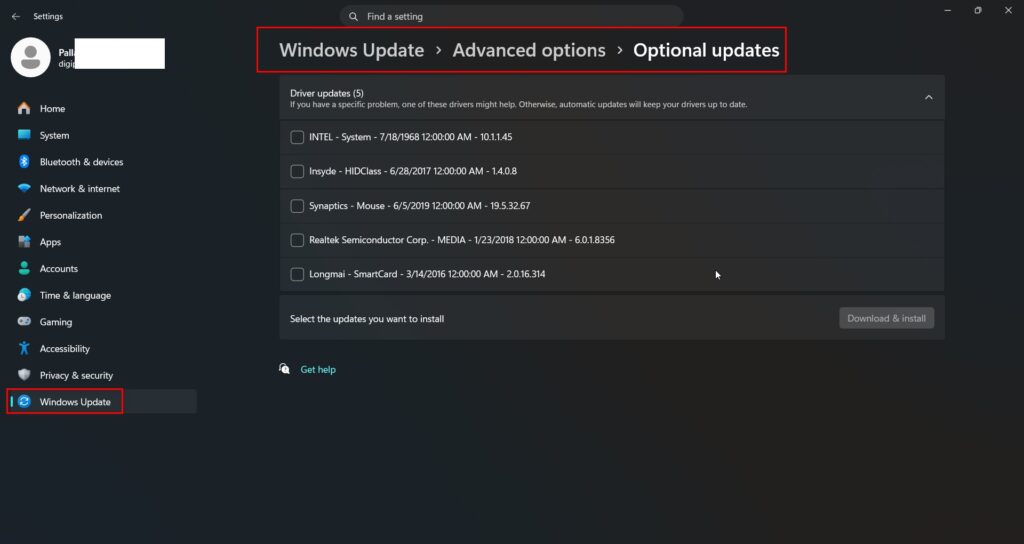
Most hardware drivers appear here, and every one is Microsoft-tested. This alone is how many people can update all drivers in Windows 10 free—and Windows 11—without ever installing a third-party program.
Method 2: Manufacturer Apps for Laptop Drivers
For laptops especially, your brand’s own tool is the best source of model-specific drivers:
- Dell: Dell Command Update / SupportAssist
- HP: HP Support Assistant
- Lenovo: Lenovo Vantage
- ASUS: MyASUS
These pull power, display, and firmware drivers that generic updaters get wrong.
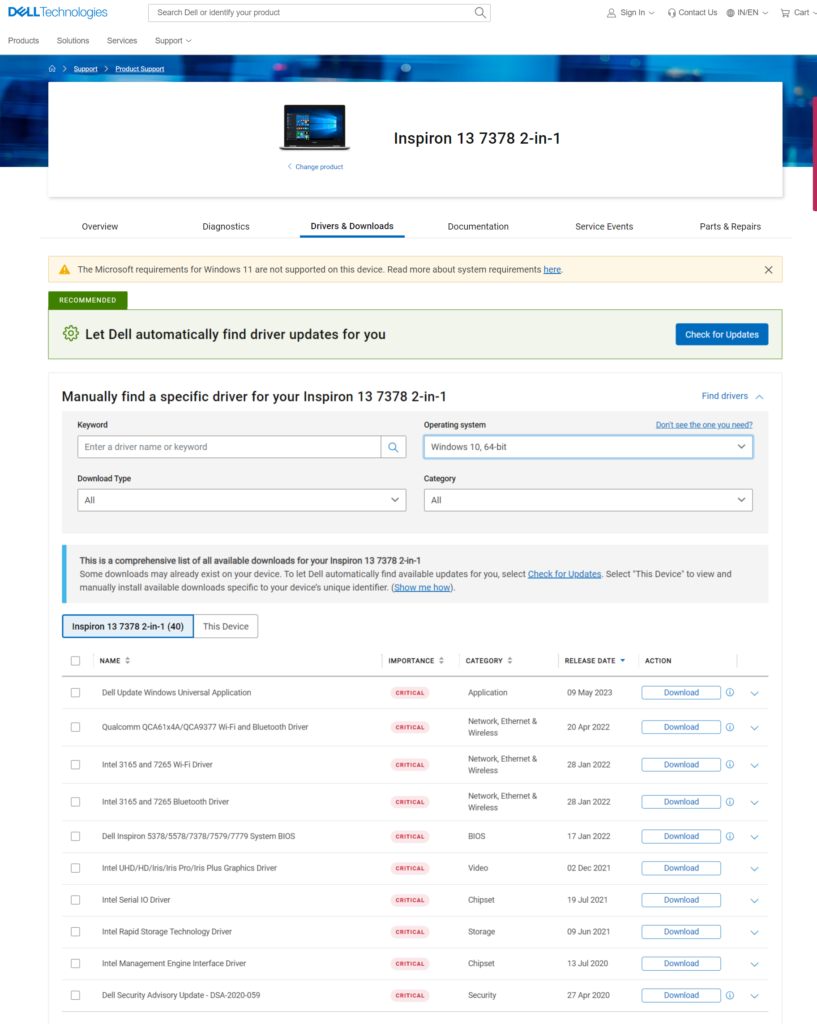
Method 3: The Command Line (For a Mass Driver Update)
If you want a mass driver updater approach without software, PowerShell’s PSWindowsUpdate module downloads driver updates straight from Windows Update and pnputil bulk-installs driver packages you already have.
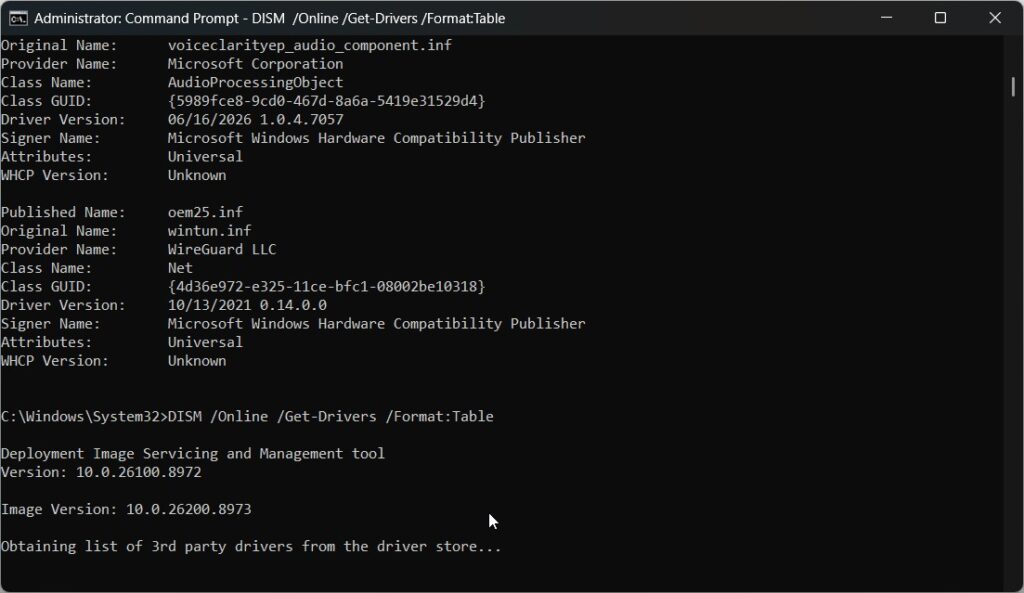
This is the real driver updater cmd / driver auto updater command prompt method people search for—free and covered step-by-step in our updating drivers using CMD guide.
Between these three free methods, you have a complete all-in-one driver updater built into Windows — no subscription, no bundled extras, no risk of a database serving you the wrong driver.
The Freemium Trap: Why “Free” Usually Isn’t
When you look for a completely free driver updater, understand what “free” actually means for most of these programs.
Nearly all commercial driver updaters use a freemium model: the scan is free, but installing the updates requires the paid Pro version.
So the typical flow is this: you download a “free driver updater,” it scans, it shows you a scary list of outdated drivers—and then it asks for $20 to $40 to actually fix them. Prices in this category run roughly $10 to $40 a year. The free version is a sales funnel, not a solution.
This matters because those “outdated driver” counts are often inflated to create urgency.
A tool telling you that you have “30 outdated drivers” is usually counting every driver that isn’t the newest, not every driver that needs help.
Someone searching how to update all drivers in Windows 10 for free ends up in front of a paywall, having learned nothing except a number designed to alarm them.
The honest takeaway: if a driver update utility makes you pay to install what it found for free, you’re not getting a free driver updater—you’re getting a free scanner attached to a subscription pitch.
The One Genuinely Free Option: Snappy Driver Installer Origin
If you want a real, completely free driver updater with no paywall and no bundled junk, there’s essentially one honest answer: Snappy Driver Installer Origin (SDIO).
It’s free, open-source, and community-maintained. Unlike the commercial tools, it doesn’t scan-then-charge, doesn’t push a Pro upgrade, and doesn’t bundle extra software during installation.
It works offline using downloadable driverpacks, which makes it genuinely useful for fresh Windows installs on a PC with no network driver yet — a real scenario the freemium tools handle poorly.
How it works: you download the driver packs (either everything or just the network packs to start), SDIO matches them against your hardware, and you choose what to install.
Because it’s offline-capable, it’s a favorite of technicians who fix PCs with no internet connection—the exact situation where a tool to update all drivers is most valuable.
Honest cons: its interface is dated and intimidating for non-technical users, the full driverpack collection is large, and because driverpacks are community-sourced, you should still create a restore point first.
But for a free program to install all drivers without a catch, SDIO is the one I’d point you to over any of the commercial names below.
The Commercial Tools: Reviews of the Best Driver Updater Software
If you’d still consider a paid tool, here’s the straight assessment of the popular driver updater software—pros, cons, and cautions, not commission-driven praise.
Driver Booster (IObit) Review
The most heavily marketed all-in-one driver updater, with one of the largest driver databases (millions of entries) and full Windows 11 support. It genuinely works for many people, creates a restore point before updates, and can install some drivers offline.
Cautions: IObit’s installers have historically pushed additional IObit products, the scan starts automatically and nags for the Pro upgrade, and the free version caps how many drivers you can update. If you install it, decline every bundled extra and watch the checkboxes during setup.
Driver Easy Review
A widely used driver update utility with automatic scanning and a large database. The free version lists outdated drivers but throttles install speed and limits you to manual, one-at-a-time updates without Pro (~$30).
Cautions: It’s a scan-free, pay-to-install freemium tool, so the “free” version is limited to identifying drivers, not fixing them at any usable speed. Our reader’s cautionary story below involved Driver Easy as well as AVG.
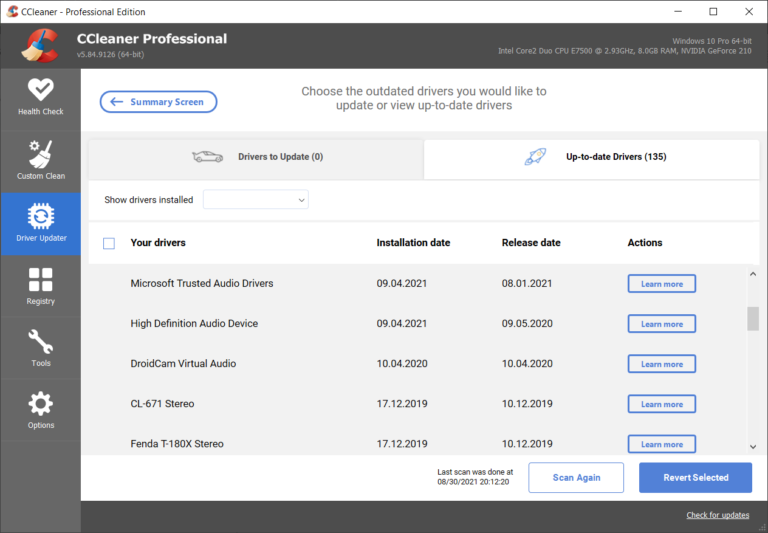
CCleaner Driver Updater Review
Bundled into CCleaner (owned by Gen, formerly Avast/Piriform). Convenient if you already use CCleaner for system cleanup.
Cautions: CCleaner itself has had a troubled history, including a 2017 supply-chain malware incident where compromised installers were distributed. The driver updater is Pro-only for installs. Fine as a scanner; not a category leader, and the brand history warrants caution.
Bit Driver Updater Review
A competent freemium scanner from a German developer, with backup and restore features and a lower price point (~$11) than most.
Cautions: like the others, it’s scan-free/pay-to-install, and its “scans the internet for the latest drivers” pitch means the same database-versus-manufacturer risk applies. The backup feature is genuinely useful if you proceed.
AVG Driver Updater Review
The priciest option here (~$40/year), with a large database and a scheduler for automatic updates.
Cautions: The strongest cautionary tale on this entire page involves AVG’s updater specifically—see the reader comment below, where it left a laptop without audio for over a week despite extended support involvement. At this price, with this risk profile, it’s the hardest of the group to recommend.
A Real Reader’s Warning (Worth More Than Any Review)
The most valuable content on this page isn’t my review—it’s a comment a reader named Angela left on the original version of this article. Her experience, lightly summarized:
After using AVG Driver Updater, her audio stopped working. She tried reverting the drivers in the app with no luck and eventually found a system restore point through their website and briefly recovered—then lost sound again the next day, with no restore point left.
Ten-plus days of support tickets followed, including a session where support deleted her antivirus without fixing the audio. She’d had a nearly identical experience with Driver Easy previously. Her conclusion: never use one of these tools again.
I’m keeping her comment on this article deliberately, because it’s the honest counterweight to an industry that markets these tools as risk-free. They aren’t. When they go wrong, they go wrong on core hardware—audio, display, and network—and recovery can be genuinely difficult, especially for non-technical users who don’t know to create a restore point first.
The lesson isn’t “every tool will destroy your “PC”—plenty of people use them without incident. The lesson is that the downside is severe and the upside is usually replaceable by free built-in methods. That risk-reward math is why this guide leads with the free options.
When a Driver Updater Actually Makes Sense
To be fair, there are legitimate uses. A dedicated tool earns its place when:
- You’re setting up an old machine whose manufacturer no longer provides drivers, and you need to find them from a database.
- You’re doing a fresh Windows install on hardware with no working network driver (SDIO’s offline packs shine here — you can’t use Windows Update without a network driver, after all).
- You genuinely can’t find a specific driver through Windows Update or the vendor—a rare hard-to-find device from a defunct brand, like an old Bluetooth adapter or a legacy PCI card.
- You maintain many PCs and want a faster mass driver updater workflow than updating each manually—though the command-line PSWindowsUpdate method often serves this better for free.
In those cases, use SDIO first (free, no catch), create a restore point, and treat any commercial tool as a last resort rather than a default.
How to Use Any Driver Updater Safely
If you’ve decided to use a tool despite the cautions, do it the safe way. These steps dramatically reduce the risk of the audio-loss scenario above:
- Create a System Restore point first. Search “Create a restore point,” open System Protection, and create one manually. This is your undo button.
- Back up your existing drivers if the tool offers it — most do. You want the option to roll back.
- Update one driver at a time, not all at once, at least for critical hardware. If something breaks, you know exactly which driver did it.
- Get the tool from the official site only. Third-party download portals bundle extra software or worse.
- Decline every optional install during setup.
- Note what changed, so you can revert a specific driver in Device Manager if needed.
Follow those six steps and even a risky driver updater program becomes far safer. Skip them, and you’re one bad database entry away from Angela’s ten days without sound.
Free vs Paid Driver Updaters: Which Is Right for You?
Here’s the honest decision in plain terms:
Use free built-in methods (recommended for almost everyone): if you have a reasonably modern PC with working internet, Windows Update plus your GPU and laptop maker’s apps cover you completely. This is the best way to update all drivers for free with zero risk of a bad database driver.
Use SDIO (for technicians and fresh installs): if you rebuild PCs, work offline, or need a genuinely free tool to update all drivers with no paywall, Snappy Driver Installer Origin is the pick.
Consider a paid tool (rarely and cautiously) only if you have specific hard-to-find hardware that the free methods can’t cover, and only after creating a restore point. Even then, the commercial tools’ main advantage over free methods is convenience, not capability—you’re paying to avoid a few clicks, at the cost of the risks above.
For most readers, the honest answer is the first option. The entire paid driver updater software category exists largely because “one-click driver updates” markets well, not because most people need it.
Best Practices for Updating Drivers Safely
- Try the free built-in methods first — Windows Update, Device Manager, and vendor apps cover most needs.
- Always create a restore point before letting any tool install drivers.
- Prefer SDIO if you want a genuinely free option with no paywall or bundles.
- Decline bundled software during any commercial installer.
- Get GPU and laptop drivers from the vendor, not a third-party database, whenever possible.
- Check what’s actually outdated first, so you update only what needs it.
Common Mistakes to Avoid
- Paying for a tool you don’t need. Windows Update and vendor apps are free and safer for most people.
- Trusting the “30 outdated drivers” scare count. It’s inflated to sell the Pro version.
- Letting a tool auto-update everything. Update drivers that fix a problem, not every old one.
- Skipping the restore point. The one step that saves you when an update breaks a device.
- Installing bundled extras. Commercial updaters often slip in additional software.
- Downloading the tool from a third-party portal. Always use the official site.
Frequently Asked Questions
What is the best way to update all drivers?
The best way to update all drivers is the free, built-in route: Windows Update’s optional driver updates page, Device Manager for individual devices, and your PC manufacturer’s app for laptop-specific drivers. These are safer than third-party tools because the drivers are Microsoft-tested and come from official sources.
Is there a completely free driver updater?
Yes — Snappy Driver Installer Origin (SDIO) is genuinely free and open-source, with no paywall and no bundled software. Most other “free driver updaters” are freemium: they scan for free but charge to install. For a truly free tool to update all drivers, SDIO is the honest choice.
How do I update all drivers for free without software?
Use Windows Update: Settings → Windows Update → Advanced options → Optional updates → Driver updates, then select all and install. Add your manufacturer’s tool for laptop drivers, and PowerShell’s PSWindowsUpdate for a command-line option. This updates all drivers for free without any third-party program.
Are free driver updater tools safe?
Some are, many are risky. They pull drivers from their own databases, and a wrong driver can break working hardware — audio and display failures are the most common complaints. Snappy Driver Installer Origin is the safest free option. Whatever you use, create a restore point first, and prefer built-in Windows methods.
Why do driver updaters say I have so many outdated drivers?
They count every driver that isn’t the absolute newest available, not every driver that actually needs updating — an inflated number designed to push the paid version. Most of those drivers are working fine. Old does not mean broken; only update drivers tied to a real problem.
What’s the best free driver updater for Windows 11?
For most Windows 11 users, no third-party tool beats Windows Update plus your GPU and laptop maker’s apps. If you specifically want a dedicated program, Snappy Driver Installer Origin is the best genuinely free option — the commercial tools like Driver Booster and Driver Easy are freemium and charge to install updates.
Can I update all drivers at once with CMD instead?
Yes. PowerShell’s PSWindowsUpdate module downloads driver updates from Windows Update, and pnputil bulk-installs driver packages you have on disk — no paid software needed. See our full guide on updating drivers using CMD for the verified commands. It’s free and avoids third-party updaters entirely.
Which free driver updater do people recommend on Reddit?
Reddit’s tech communities overwhelmingly recommend against commercial driver updaters and point to Windows Update, manufacturer tools, and Snappy Driver Installer Origin for the rare cases a tool is needed. The consensus matches this guide: the best way to update all drivers is usually the free, built-in one, not a paid program.
Conclusion
The honest answer to “what’s the best free driver updater” is one the review sites rarely give: for most people, it’s the tools already built into Windows. Windows Update, Device Manager, and your PC maker’s app cover nearly every driver safely and free — that’s the genuine best way to update all drivers.
If you truly need a dedicated tool, Snappy Driver Installer Origin is the only one that’s free with no catch. The commercial names — Driver Booster, Driver Easy, CCleaner, Bit Driver Updater, and AVG — are freemium scanners that charge to install, and when they go wrong, they can take out your audio or display for days, as our reader’s story shows.
The safe path is simple: check what’s actually outdated first, update through free built-in methods, create a restore point before any tool touches your drivers, and treat paid updaters as a rare last resort rather than a default. Do that, and you get current, stable drivers without the subscription or the risk.
Start with the free methods in our guide to updating all drivers at once, and check what’s genuinely outdated first with our driver-checking guide. Then tell us in the comments whether you went the free route or found a tool genuinely worth it—the honest experiences help every reader who lands here next.


I guess I’ll be the first comment.. My advice? Do NOT use AVG’s Driver Updater. Or Driver easy where I comment at the end of this paragraph. I recently used the AVG Driver Updater and thought everything was great, until….My audio stopped working. I asked for help from their tech service, tried reverting them on the app with no luck and finally found out how to do a system restore point from their website (?). Why didn’t they didn’t know how to do that, I have no idea! I got my sound back until I used my computer the next day after being shut down and BOOM- no sound, and no restore point available. As of today, I’ve been without audio for 10 days with no end in sight. Log files were sent to their ‘senior team’- yeah, right. After a week I got an email saying ‘we have an answer for your driver audio problem”! Yay, or so I thought. After over 3 hours online with them, they deleted my kaspersky security saying that was the answer, and I only wish it had been. So they sent more files to their senior team and I need to wait another week most likely. I’m quite sure my computer is permanently without sound and I highly doubt they will buy me a new laptop!! I hoped to have my laptop working much better and this has been a total disaster! This happened before with Driver Easy and due to their extremely long wait for an email, I contacted support.com and thankfully at that time this smart guy there installed an new one, I guess. I am NOT a technical person so this kind of problem is very upsetting! I was warned by the support.com guy not to use any driver updates in the future but the websites all say how great they are and how they can fis things that go wrong. Maybe if you want to wait a few weeks and not be able to use our computer normally. Live and learn! I will never use one again! Neither company had a fast answer to actually fix the problem, and no phone number to reach anyone. The only good thing about AVG is that their tech support people get online almost immediately every time. I have to commend them for that, but really can’t say you should use their products.