
Last Updated:
You can connect a CPU (Central Processing Unit) to a TV.
You will need a cable that is compatible with both the CPU and the TV.
Connecting your PC to a TV is a great way. Smart TV is the trend today.
You can enjoy your favorite videos, photos, and music on a larger screen.
It’s simple to do. And all you need is the right equipment.
First, you need a TV’s HDMI port.
The cable will connect your computer to your TV.
And, allow for audio from your computer and video transmission.
If you don’t have an HDMI cable, you can also use an HDMI-to-DVI (Digital Visual Interface) or VGA (Video Graphics Array) adapter.
Windows PC to a TV
Next, you’ll need to enable sound on your TV.
Depending on your TV, you may be able to enable audio directly in the settings.
An HDMI adapter can be used if you don’t have ports. Or, you may need to use an audio adapter.
Connect it to your computer’s audio output.
After connecting your PC to your smart TV, you can enable sound. Enable sound.
You’re ready to enjoy watching, listening to, and viewing your favorite content on the big screen.
Microsoft Community Q&A helps in finding solutions to common problems.
3.5 mm red and white RCA cables are old. But it can produce a desktop screen on the TV.

How Alternate Cables Work
Audio output needs a separate plug. The computer and TV should have compatible ports.
Browsers can help to display sites from the internet. Wiki How articles are good for know-how.
The PC-to-TV USB composite end of the cable can be used in CAT cables.
The laptop’s audio-in port using VGA or RCA is separate.
Using HDMI, video and audio come as one signal.
A separate audio cable is necessary for multiple speakers.
Tighten the screw of the hardware to prevent loose connections.
Resolution will be based on the CAT cable.
Plug one end into the PC and the other end into the TV.
Types of Cables connecting CPU to a TV
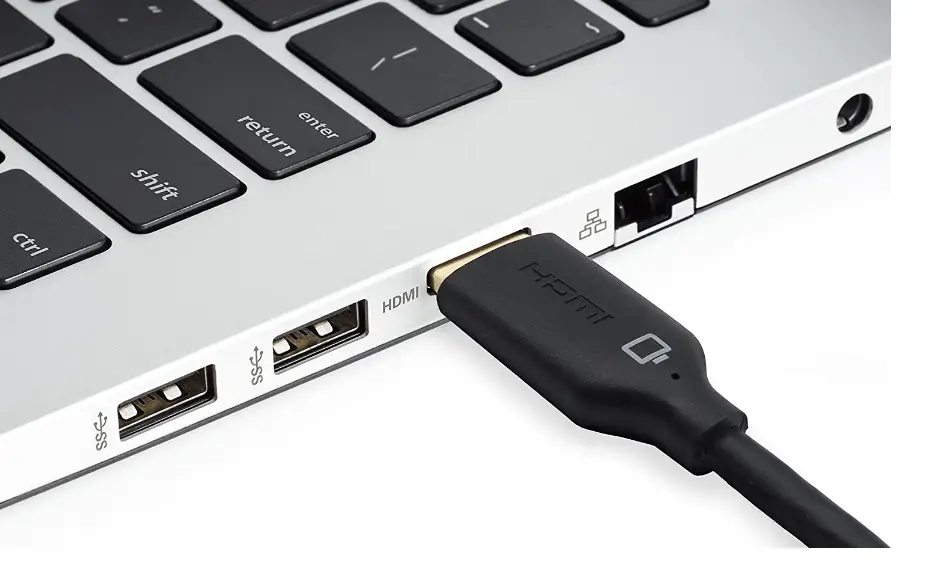
HDMI is a digital connection that can send audio and video signals from a computer to a television. A lot of current TVs and PCs have the port, which is why this is a popular and available choice.
VGA is an analog connection. It can transfer video from a computer to a TV. It is not as widespread as other methods. But certain older TVs and computers have VGA ports.
DVI is a digital tech. It can transfer video from a computer to a television. It is not as common as HDMI. But some TVs and PCs may have DVI ports.
S-Video is an analog wire. It can transmit video from a computer to a television. It may not be compatible with all TVs and computers, particularly if they do not have the appropriate S-Video input or output ports required for connection.
Warning—Regarding Cable Connections
It is important to note that the CPU and TV must both have the same type of port in order to use a particular one.
For example, if the CPU has an HDMI port and the TV has a VGA port, you will not be able to use one to connect the two.
In this case, you will need to use a different type of device that can convert the signal between the two different types of ports.
You can connect your laptop to a TV using either a wired (with an HDMI) or wireless connection. You can also use a DVI-to-HDMI adapter and use one to connect your laptop to your TV.
HDMI to DisplayPort adapters are also available. S-video can be used, but you will need to use your phone’s output and a phone-to-RCA adapter.
How to Connect a Laptop to a TV with an HDMI Cable?
- First, make sure that your TV has an input port and that your computer has a port.
- Connect one end of it to the port on your computer and the other end to the input port on your TV.
- Turn on your TV and select the correct input using the TV’s remote control or on-screen menu.
- On your computer, adjust the settings to ensure that the device is selected as the default device.
- Play a video or audio file on your computer to confirm that the sound is being transmitted through the connection to your TV.
How to Connect a Computer to the TV with Sound Wirelessly?
There are a few ways to get sound from your computer to your TV without using a connection:
Total Time: 3 minutes
Using a cable:
If your TV has a 3.5 mm auxiliary input or an RCA input, you can use one to connect your computer to your TV. Simply connect one end of it to your computer’s port (usually a headphone jack) and the other end to the appropriate input on your TV.
Using a wireless connection:
If your TV and computer support Bluetooth, you can use a Bluetooth connection to transmit from your computer to your TV. First, make sure that both your TV and computer are paired with each other. Then, adjust the settings on your computer to use the Bluetooth as the default device.
Using a media streaming:
You can use a media streamer, such as a Chromecast, Apple TV, or Amazon Fire Stick, to stream audio and video from your computer to your TV over a Wi-Fi connection. Simply connect the media streamer to your TV and use the appropriate app or software on your computer to send the audio and video.
Supply:
- auxillary cable
Tools:
- bluetooth adapter
Materials: media streaming device
The easiest way to output sound from a computer to TV using VGA
To be able to hear sound from your computer through your TV using a VGA connection, you must follow these steps:
Check that your TV has a VGA input port and that your computer has a VGA port.
Connect one end of a VGA cable to the VGA port on your computer and the other end to the VGA input port on your TV.
Switch on your TV and select the ideal VGA input using the TV’s remote control or on-screen menu.
On your computer, adjust the settings to make sure that the VGA device is specified as the default device.
Play an audio or video file on your computer to verify that the sound is being sent through the VGA connection to your TV.
Warning Notes:
Please note that a VGA connection can be used to transmit video. from your computer to your TV. It does not support transmission. In order to get sound through a VGA connection. You will need to use an additional connection. such as an auxiliary or a Bluetooth connection.
How to Hook TV Speakers to a Computer HDMI Windows 10
To get the sound from your computer to your TV with a connection on Windows 10, do the following:
Connect the two devices with an I.
Go to the Start menu and select Settings.
Then, in the Settings app, access the System category, and click Sound.
In the Sound settings, go to the Output tab.
From the list of available TVs, pick yours.
To make the TV the default for your computer, press the Set Default button.
Close the Sound settings and check if the sound is playing by playing a video or file on your computer.
You may need to adjust the settings on your TV. to make sure the sound is correctly outputting. through the TV’s speakers.
YouTube video
Setting to connect PC to Monitor with Sound on Windows 11
To connect your computer to your TV with sound on Windows 11.
You will need an HDMI cable.
Make sure it is of the correct type.
that works with your PC. Connect to your computer and to your TV.
Open the sound in Windows 11.
To make sure that the correct output is selected.
Select the output connected and it as default.
Right-click the connected output.
Select Show Disconnected.
Run Audio Check in HP Support Assistant to make sure it is functioning properly.
Use the Windows Sound Troubleshooter.
You can resolve any playback issues.
Perform a complete reset of your computer to clear information from the computer memory.
Update your computer with HP Support Assistant to install updates.
Including BIOS updates.
Use the advanced display and sound troubleshooting for Windows to troubleshoot any specific issues.
You might also like
- HDMI over Cat 7/6/5 cables—works with HDMI Extender Cable 230 ft and 4K HDR
- Video over Ethernet and 4k 1080p at Gigabit transfer rate – Cable as an HDMI Extender
- 6 Fixes for Windows 11 not detecting HDMI Monitor
Best HDMI cables for connecting your PC to your TV using a keyboard and Mouse
Some common features:
– Supports up to 4K, 3D video.
– audio return channel (ARC) for high-quality sound.
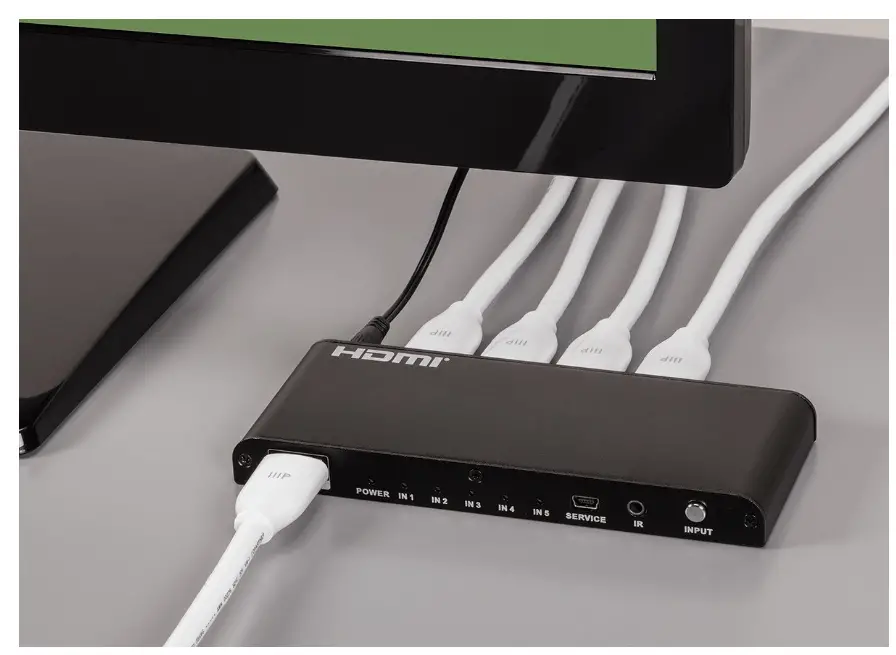
Monoprice Certified Premium High Speed HDMI Cable (3 feet)
Buy from Amazon
- It is certified by authorized test centers.
- Each length has been tested.
- to ensure that it meets the highest standards of performance. It has a dual video stream
- supports up to 4K (3840x2160p @60Hz).
- including 3D and multi-view video.
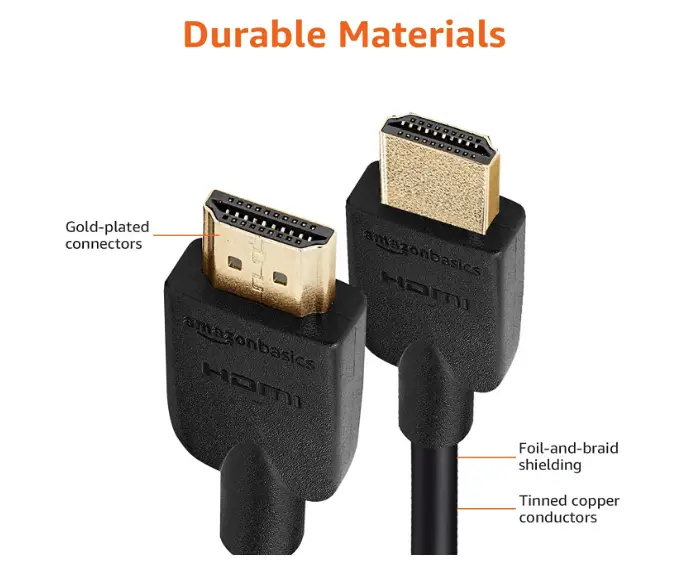
The AmazonBasics High-Speed HDMI Cable measures 6 feet in length.
Buy from Amazon
- It is with all 2.0. It supports up to 18 Gbps bandwidth.
- Has a durable build with 26 AWG.
- It also supports Audio Return Channel (ARC) and Ethernet.
- It also supports up to 32 channels and a 1536 kHz sample frequency.
- It also supports up to 4:4:4 chroma sampling.
- high dynamic range (HDR) and Dolby Vision.
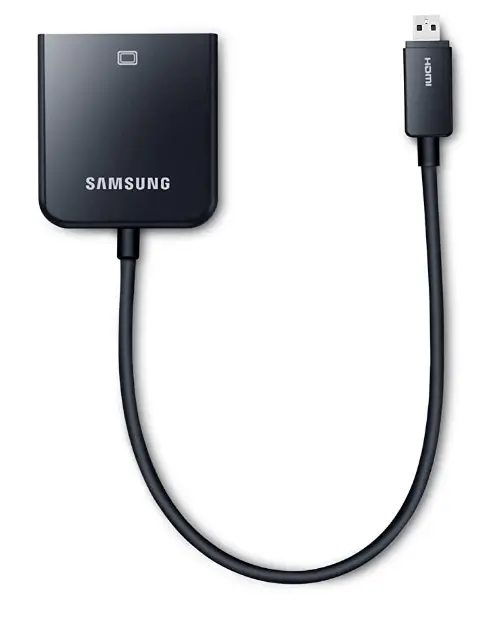
Xsusmdom HDMI to VGA.
- supports up to 1080P HD video.
- with computers, laptops, PCs, monitors, projectors, and HDTVs.
- It has a gold-plated connector.
- And a VGA connector for reliable connection.
- It has a built-in active IC chip, which converts digital signals to analog VGA signals.
- It also supports the HDCP 1.2 protocol.
- It has a 4.5-foot length. It comes with a one-year warranty.
- It is designed with a slim and sleek design for a space-saving installation.
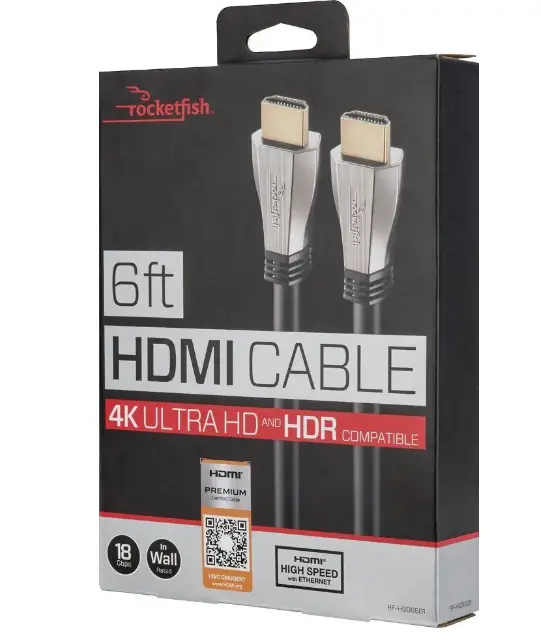
The Rocketfish 4K Ultra HD High-Speed HDMI Cable measures 6 feet in length.
Buy from Amazon
- It offers a transfer rate of up to 18 Gbps for lag-free image and audio transmission.
- It is CL2 rated for in-wall use.
- And it has a 360-degree metal connector shell.
- It is designed to resist EMI and RFI interference.
- It also works with all 2.0. All previous versions.
- It also features silver content soldering.
- 24K gold-plated contacts.
- The connector is precision-made to ensure a reliable connection. It is UL certified.
- And features a lifetime limited warranty.
- It is also shielded with a 3-layer and has a 6-foot length.
Belkin High-Speed HDMI Cable (6 feet)
Buy from Amazon
- It is designed with an ultra-slim profile.
- It is designed to fit into tight spaces.
- making it ideal for wall-mounted TVs.
- It is also suitable for other applications where space is limited.
- It works backwards with any 1.4 version.
- Allowing for easy connection to multiple.
- It is designed to offer optimal signal transfer.
- Reducing interference and providing a clear picture with vibrant colors and sharp details.
ENJOYING OUR CONTENT?
Stay up to date with our latest guides, insights, and news. Tap below to follow us directly via your search feed.
